Portland’s Shanghai Tunnel story is one of those legends that sounds too perfect to question.
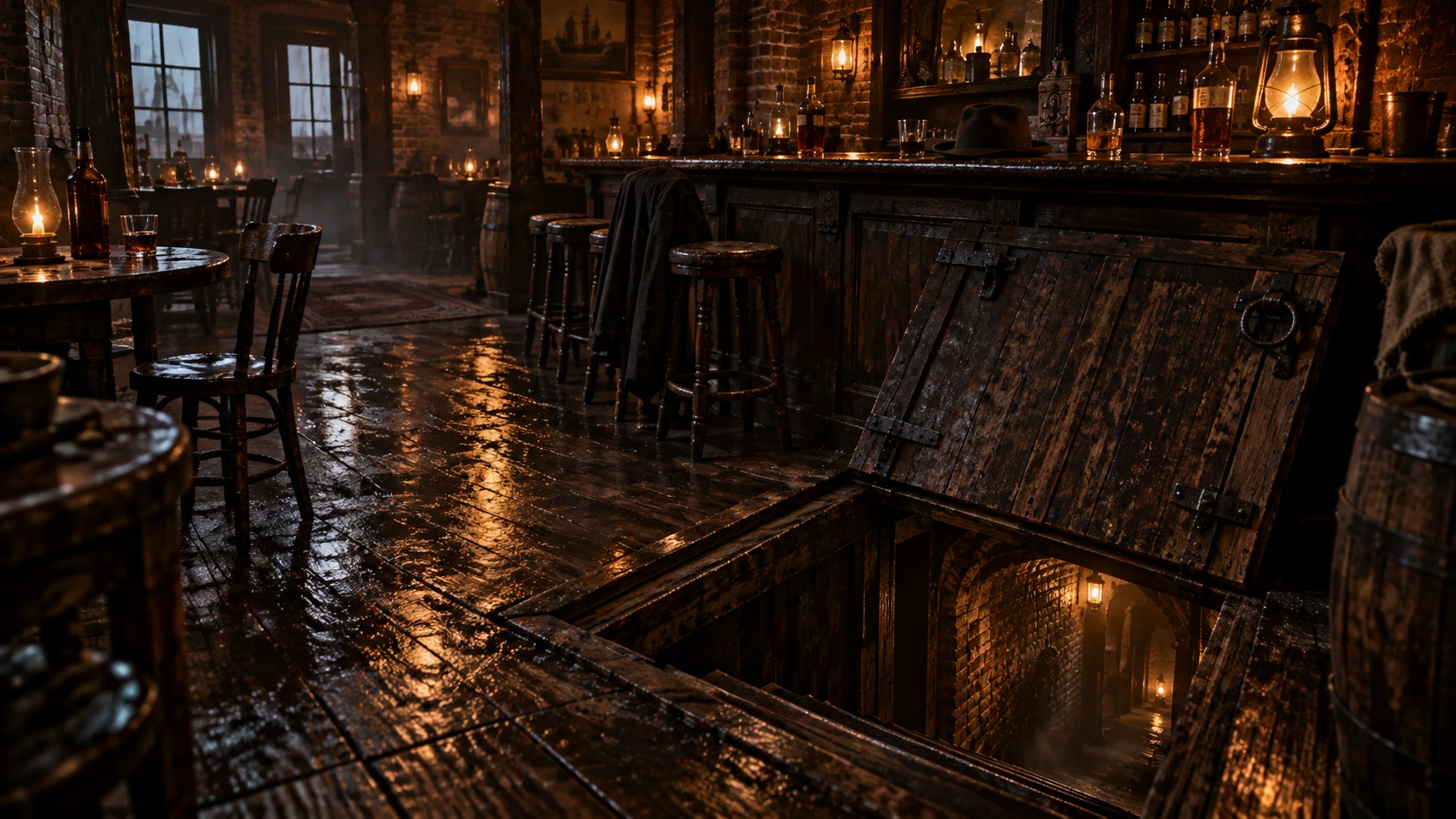
A man enters a waterfront saloon. Somebody slips something into his drink. He falls through a trapdoor. He wakes up underground. Hours later, he is dragged through a tunnel and sold to the captain of a waiting ship.
By morning, Portland is gone.
It is cinematic. It is horrifying. And parts of it are absolutely rooted in real history.
But not necessarily the parts people think.
The short version
Shanghaiing happened.
Men were kidnapped, incapacitated, deceived or coerced into service aboard ships in Portland and other West Coast ports.
Crimps operated in Portland.
Professional recruiters and boarding masters supplied crews to captains, sometimes collecting per-man fees known as blood money.
Underground spaces existed.
Old Town had basements, below-grade passages, storage areas, sidewalk vaults and escape routes tied to ordinary commerce and vice.
Some passages connected buildings.
There is evidence of localized connections and underground access, but that is not the same thing as one enormous citywide tunnel system.
A vast kidnapping tunnel network.
Historians have not found evidence proving that a sprawling network routinely moved kidnapped sailors from bars to the waterfront.
Start with what is unquestionably real
Shanghaiing was not invented for a ghost tour.
It was a real maritime labor practice.
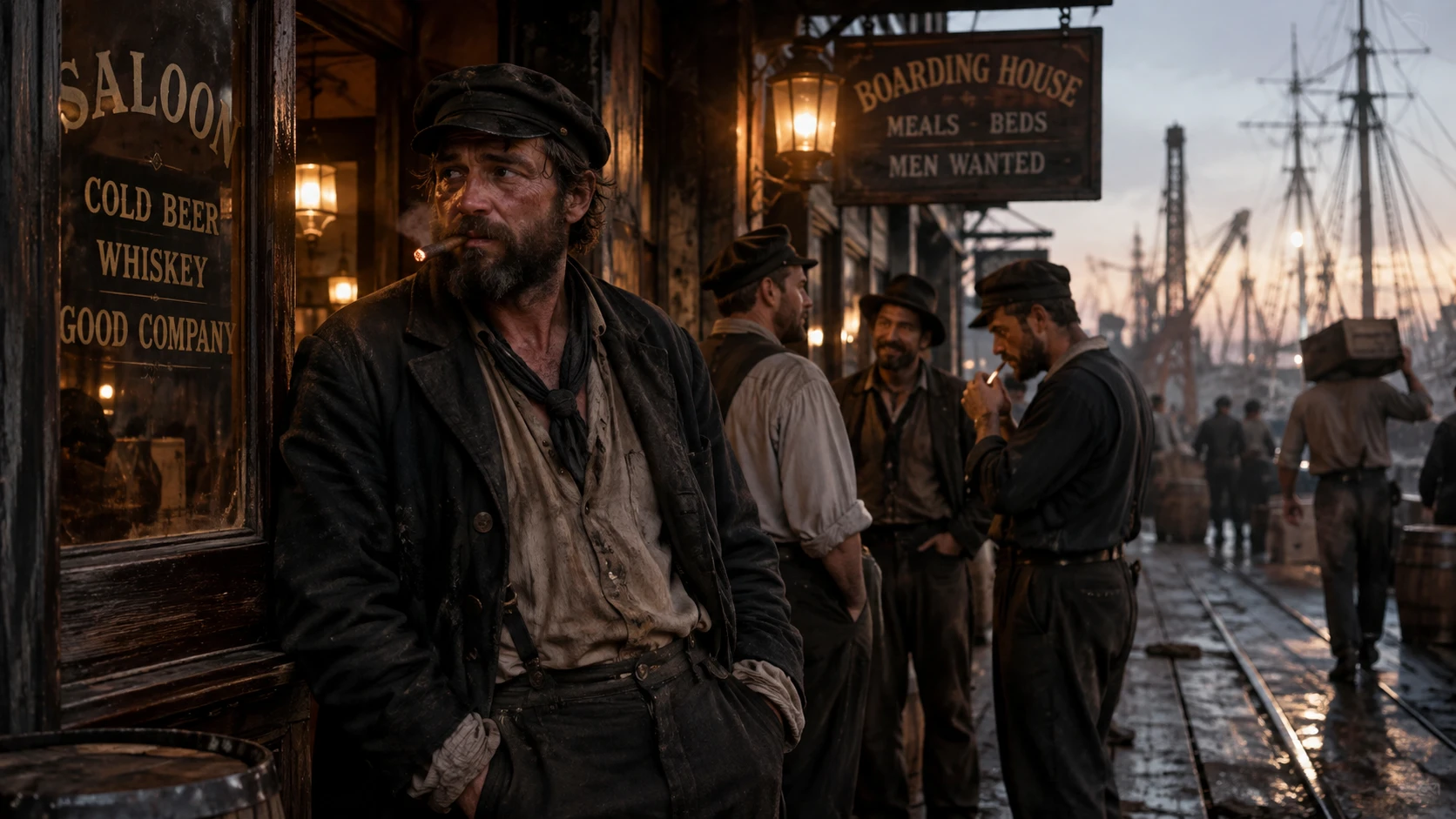
A sailor could be drugged, deceived, trapped through debt, kidnapped or otherwise forced onto a ship. A crimp delivered him to the captain and collected money.
Portland became vulnerable to that racket because it was a major wheat-exporting port. Tall ships arrived needing crews for long voyages to Europe and Asia. Sailors deserted. Captains needed replacements.
Somebody discovered there was money in solving that problem.
The underground was real too
This is where the story gets slippery.
Portland absolutely had underground spaces.
Basements sat beneath hotels and commercial buildings. Goods could be moved below street level. Gambling rooms and houses of prostitution had reasons to want discreet exits. Sidewalk vaults and storage spaces extended beneath parts of the city.
Work crews occasionally uncovered underground features.
None of that is controversial.
What historians dispute is the leap from:
“Portland had underground passages.”
to:
“Portland had one enormous secret system built to transport kidnapped sailors to ships.”

The Oregon Encyclopedia notes that historians of Old Town have confirmed Shanghaiing, crimping and other criminal activity in the district, but have not found evidence of a tunnel network specifically linked to the Shanghai trade.
Then somebody gave the darkness a story
The modern legend did not emerge at the height of the Shanghaiing era.
It grew later.
In 1933, journalist Stewart Holbrook wrote a series of colorful stories about Portland’s old waterfront for the Sunday Oregonian.
Holbrook was a gifted storyteller. Some of the stories were difficult to verify.
But they gave Portland something powerful: a mythology about the city it used to be.
The respectable Portland above ground now had a shadow version underneath it.
The man who connected the dots
In the late 1960s and 1970s, Michael P. Jones began exploring Old Town basements.
Jones said he had mapped a network of tunnels and strongly connected those spaces to Portland’s Shanghaiing history.
By 1979, tours were being offered.
And this is the moment the modern Shanghai Tunnel legend really locked into place.
Jones did acknowledge that underground spaces had other purposes: moving merchandise, escape routes from gambling rooms, exits from houses of prostitution, and ordinary basement use.
But the kidnapping story was the one people remembered.
What about the trapdoors?
The trapdoor story is probably the most famous piece of Portland tunnel folklore.
A man stands at the bar. A section of floor opens. He drops into darkness.
It is almost too good.
Travel Portland still notes that functional trapdoors exist in Old Town bars and repeats the lore that victims may have been dropped below.
But the presence of a trapdoor does not prove its purpose.
Historic commercial buildings used floor openings for freight, storage and access. Vice businesses could also use hidden exits for entirely different reasons.
So:
trapdoors are real.
the kidnapping function is lore.
What about thousands of victims?
Some tunnel stories claim enormous numbers of men disappeared beneath Portland every year.
Those numbers are another place where historians become skeptical.
The actual extent of Shanghaiing in Portland is unknowable.
Seamen’s organizations documented serious crimping problems across the West Coast, particularly in San Francisco Bay, Puget Sound and the Columbia River.
But claims of a perfectly organized Portland kidnapping machine moving huge numbers of people through tunnels do not have equivalent documentary support.
What do you actually see on the tour today?
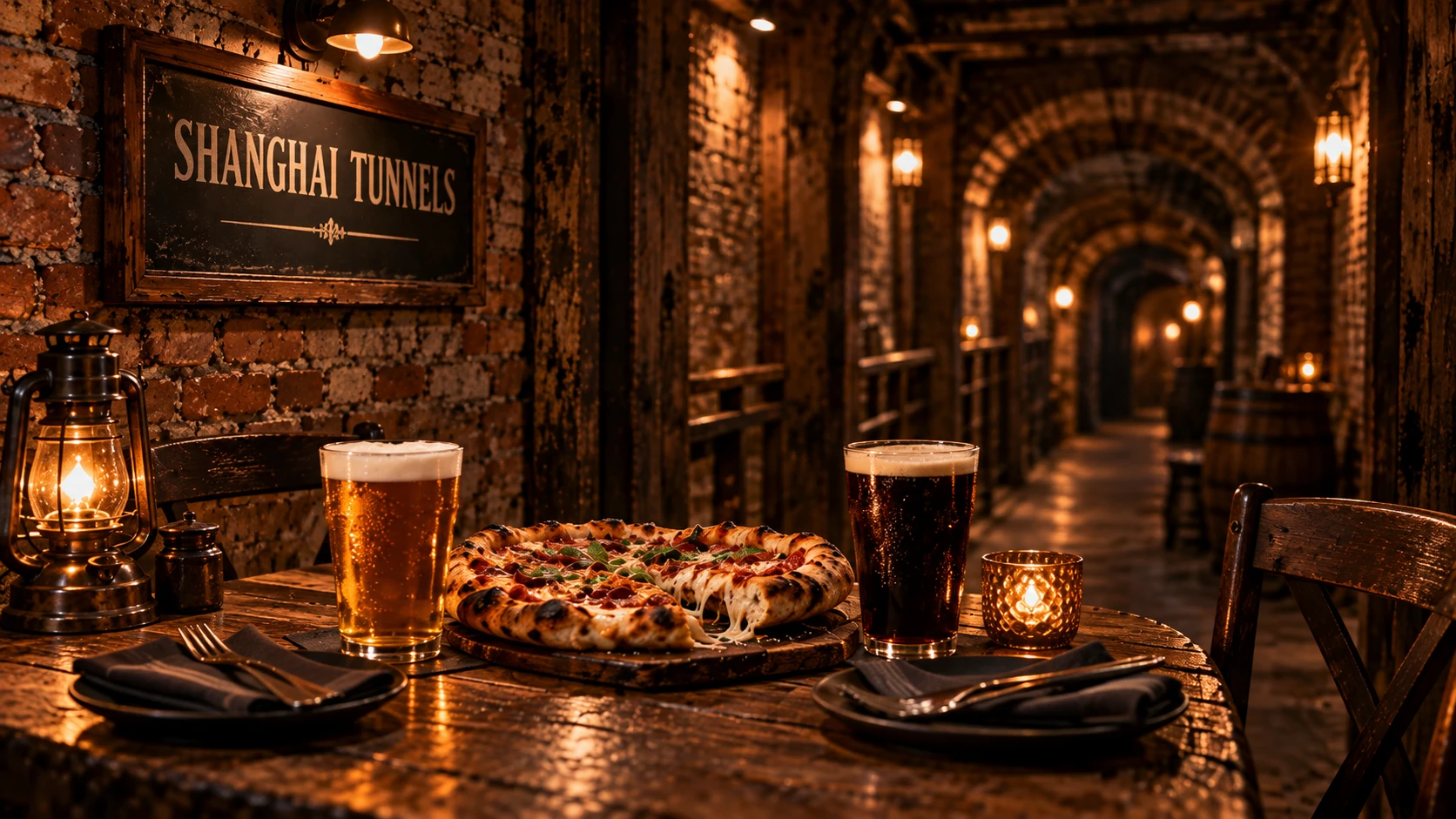
Today’s public Shanghai Tunnel experience is beneath Old Town Pizza & Brewing in the historic Merchant Hotel building.
Travel Portland describes a small accessible section beneath the building: shadowy basement rooms, short brick passages, and longer sections disappearing into darkness.
It is atmospheric.
It is historic.
It is not proof of a citywide secret railway for kidnapped sailors.
And maybe that is exactly why the experience still works.
You stand somewhere real while deciding how much of the story around you you are willing to believe.
Why the myth refuses to die
Because every part of it feels like it should be true.
Portland had violent waterfront crime.
Portland had crimps.
Men really were Shanghaiied.
Old Town really had dark basements.
There really were saloons, gambling rooms, brothels and hidden exits.
Put those facts together in the right order and your brain builds the tunnels for you.
So what is the answer?
Were people Shanghaiied in Portland?
Yes.
Were crimps paid to deliver sailors to ships?
Yes.
Were there underground rooms and passages beneath Old Town?
Yes.
Can historians prove that all of those spaces formed one vast secret network routinely used to move kidnapped victims from bars to ships?
No.
That is the strange beauty of the Shanghai Tunnel story.
Strip away the parts we cannot prove and what remains is still dark enough.
The basement is real
Maybe the most unsettling way to experience Portland’s underground is not to ask whether every legend is true.
Ask what had to be true for the legend to exist at all.
A port where men could disappear.
A labor system willing to buy them.
A waterfront full of people who knew how to look away.
And beneath it all: basements, brick, darkness, and just enough passageway to make the rest imaginable.